JOYDD BLOG
Blog

Buying Guides
How to Choose an Interactive Vending Machine: 5 Requirements to Confirm
Learn the five requirements to confirm before choosing an interactive vending machine, from product fit and user flow to site, operations, and integration.
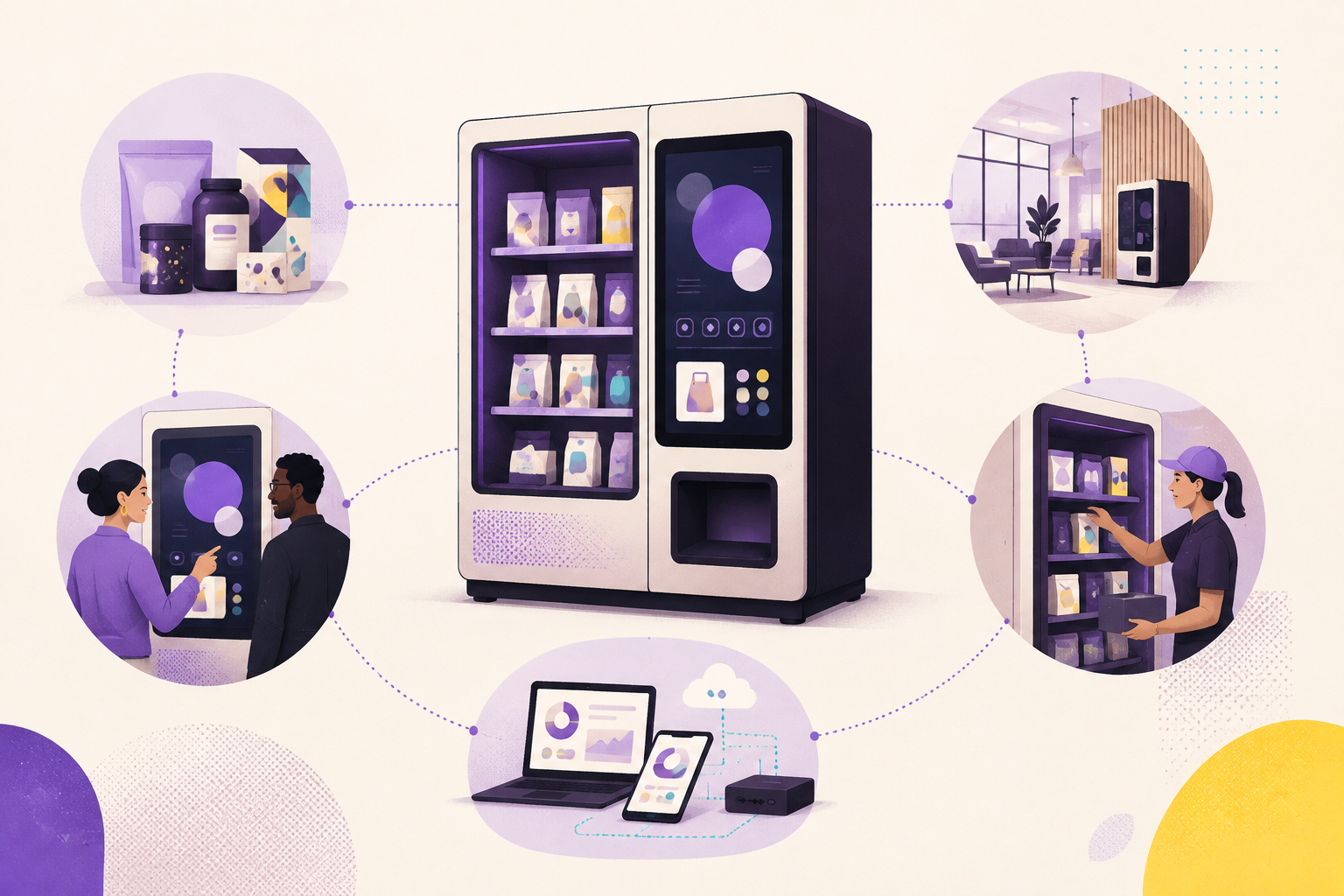
Choosing an interactive vending machine involves more than comparing cabinet designs, screen sizes, and prices.
A conventional vending machine is primarily built to store products, accept payment, and dispense an item. An interactive vending project may also involve touchscreen content, personalized products, prize mechanisms, on-site production, branded experiences, or gamified customer journeys.
The equipment might be used to sell candy and gifts, produce personalized souvenirs, print photo products, or create an interactive retail experience in a shopping mall, tourist attraction, family entertainment venue, or temporary event.
Each project places different demands on the machine structure, software flow, capacity, payment configuration, and level of customization. Two machines may look similar from the outside while using completely different internal systems and customer journeys.
Before requesting a quotation, confirm the following five types of information. Doing so will help a supplier recommend a more suitable interactive vending solution and prepare a more accurate project proposal.
1. Product, Finished Item, and Consumable Requirements
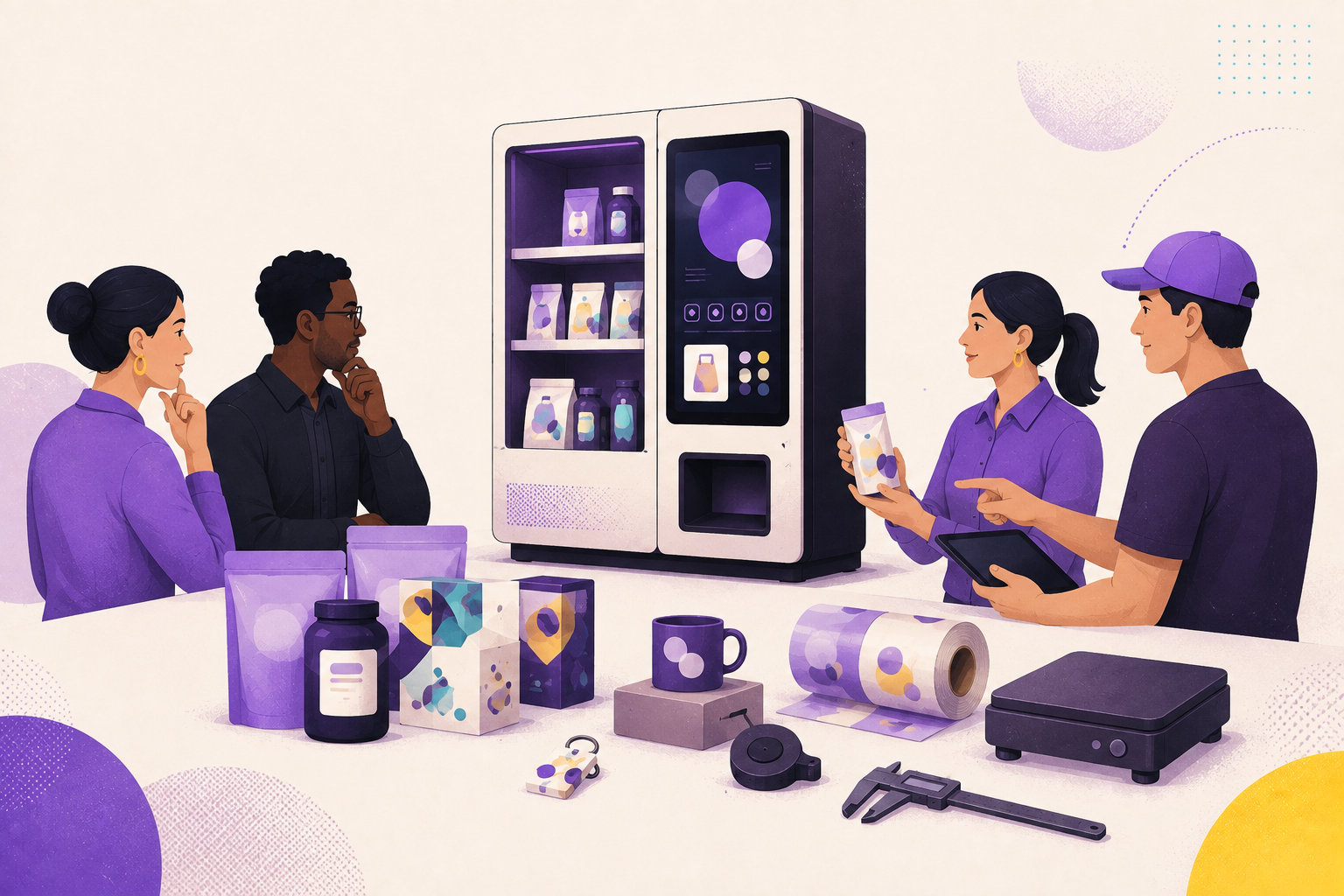
Start by defining what the machine will sell, distribute, or produce.
For a project involving packaged merchandise, provide:
- The product category
- Package length, width, and height
- Weight per item
- Packaging material
- Number of SKUs
- Whether the product is fragile, flexible, easily deformed, or likely to jam
- Any temperature or humidity requirements
- Whether each transaction dispenses one item or a combination of items
- Estimated daily sales or distribution volume
If the project involves on-site production or personalized souvenirs, also clarify:
- The type of finished product
- Finished dimensions and materials
- Whether customers provide a photo, text, design, or other content
- The number of templates or formats available
- Expected production time per item
- Required printing, engraving, or production consumables
- How consumables and waste materials will be replaced or removed
- Where and how the customer collects the finished item
Boxed gifts, loose candy, photo magnets, personalized newspapers, UV-printed products, and engraved souvenirs require very different storage, production, and delivery mechanisms.
The supplier may need to design or select product channels, hoppers, compartments, production modules, or collection openings based on the actual item. A request such as “We want to sell souvenirs” or “We need a candy machine” usually does not provide enough information for accurate equipment selection.
Whenever possible, share physical samples, packaging drawings, dimensions, weights, and a short handling video.
2. The Customer Interaction and Purchase Journey
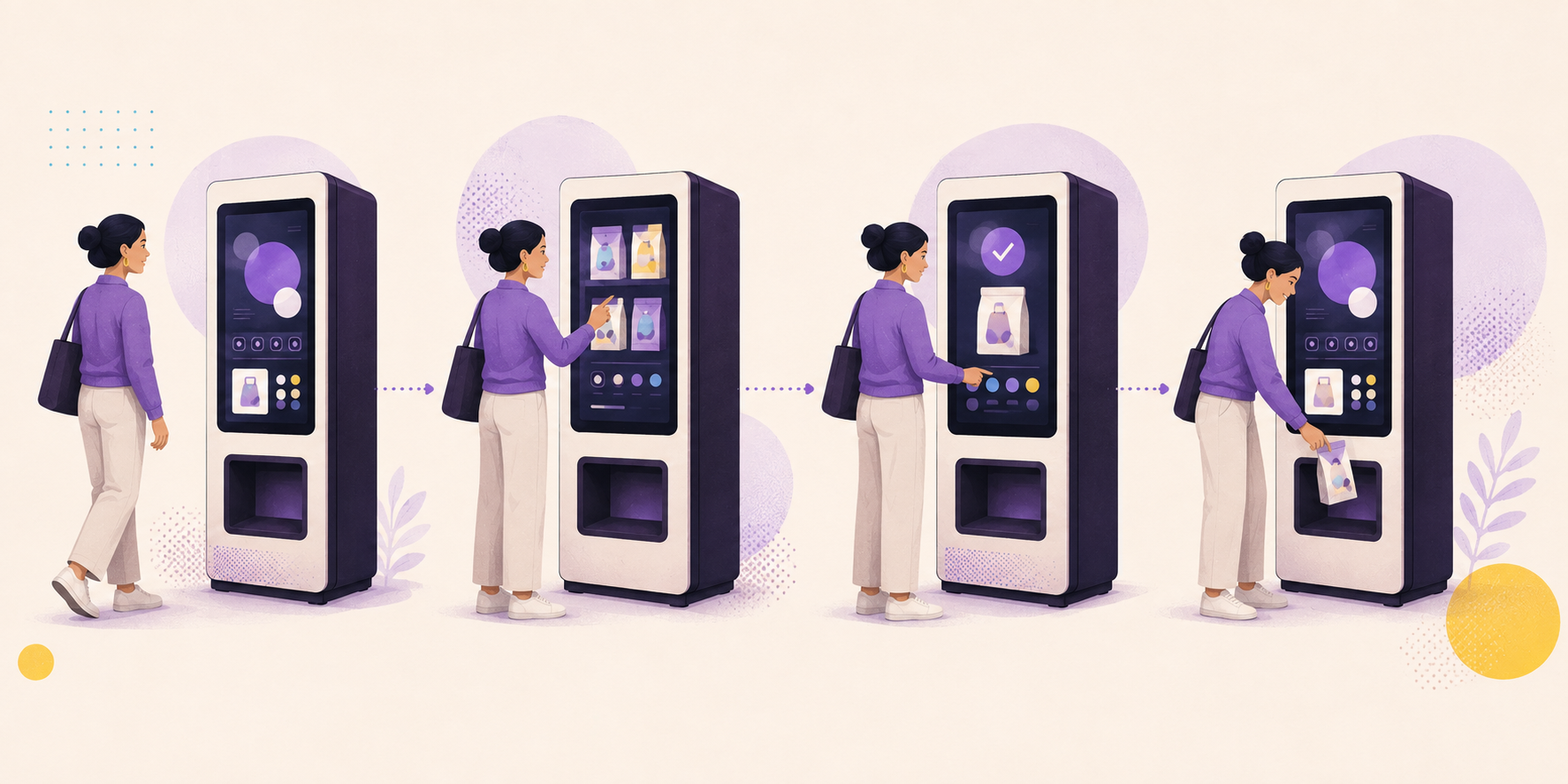
One of the main differences between interactive vending and conventional vending is that the customer may participate in a complete experience rather than simply complete a transaction.
A typical journey may include:
- The customer notices the machine through its screen, lighting, product display, or visual content.
- The customer selects a product, souvenir format, or interactive experience on the touchscreen.
- The customer uploads a photo, enters text, chooses a design, answers a question, or completes a short game.
- The customer reviews the selection and pays or enters a redemption code.
- The machine dispenses, prints, or produces the item.
- The customer collects the product and may receive an option to share or continue the experience.
Before selecting the machine, clarify:
- How the customer starts the experience
- Whether a touchscreen is required
- Whether the journey includes scanning, photography, or content upload
- Whether a game, prize, quiz, or reward mechanism is involved
- Whether customers need to preview and approve personalized content
- Whether the item is purchased, redeemed, or distributed as part of a free campaign
- Whether a receipt, QR code, or digital voucher is required
- Which interface languages are needed
- How long one complete interaction should take
- What happens if payment, production, or dispensing fails
- Whether order, inventory, or interaction data needs to be stored
For a high-throughput retail application, the interaction should generally be short and easy to understand. For a branded campaign or a personalized souvenir experience, the project may place greater emphasis on participation, visual storytelling, and shareability.
Define the customer journey before selecting the machine. This determines whether the project needs standard vending functions or a customized interface, content experience, and software workflow.
3. Installation Site and Target Audience
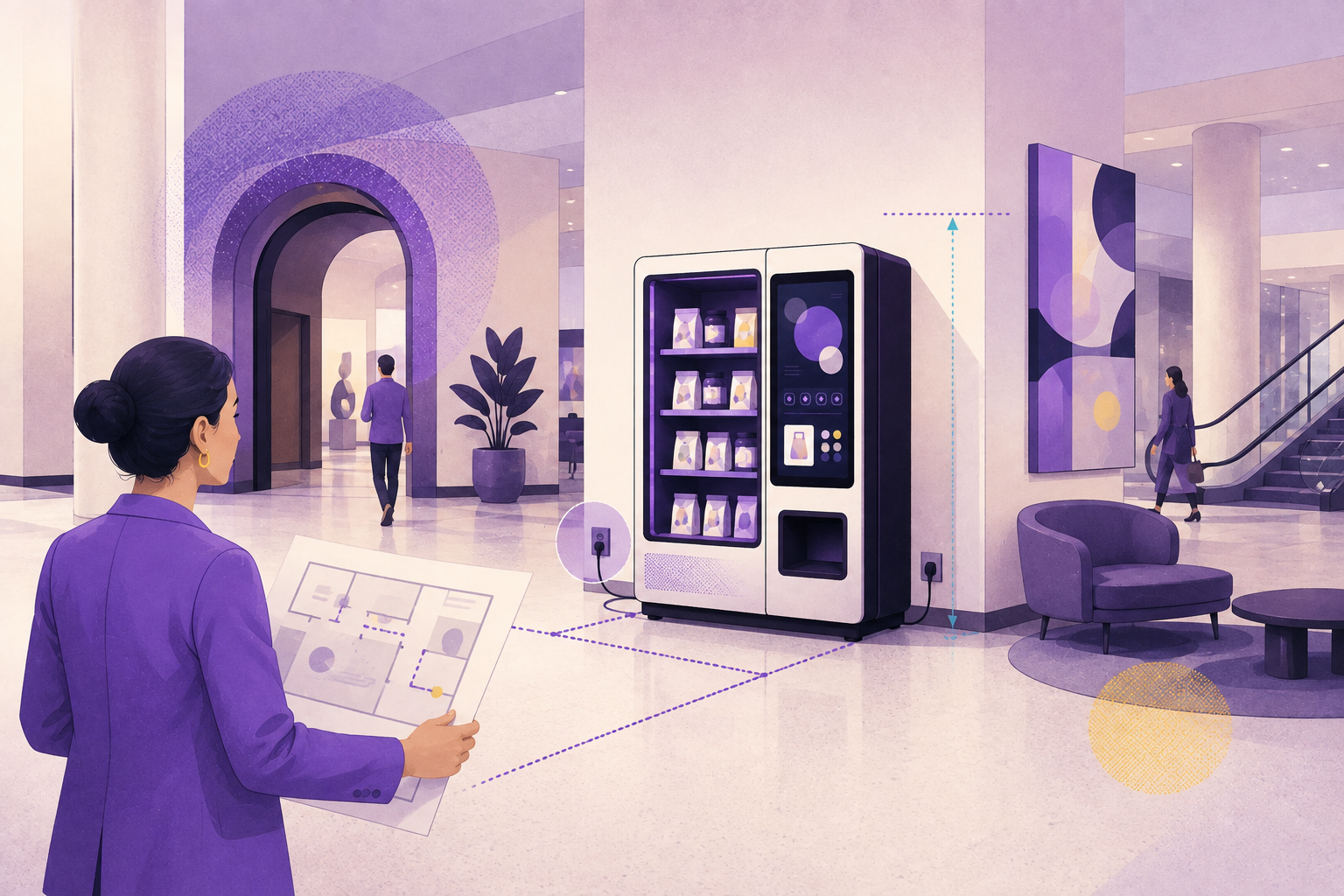
The same machine can face very different operating conditions in a tourist attraction, shopping mall, family entertainment venue, or temporary event.
Provide the supplier with the following information:
- Country and city of installation
- Type of venue
- Indoor or outdoor placement
- Long-term operation or short-term campaign
- Primary customer age groups and languages
- Estimated daily foot traffic and peak periods
- Whether staff will be available nearby
- Maximum machine width, depth, and height
- Door, elevator, corridor, and delivery-route dimensions
- Available voltage, frequency, power supply, and plug type
- Wi-Fi, mobile network, or wired-network availability
- Temperature, humidity, dust, rain, wind, or other environmental conditions
- Restrictions related to sound, lighting, appearance, or machine size
A personalized souvenir kiosk in a tourist attraction may require locally relevant designs and a multilingual customer journey. A shopping mall project may prioritize appearance, footprint, pedestrian flow, and reliable daily operation. A temporary activation may require easier transportation, faster installation, and simple relocation after the event.
Total floor area alone is not enough. Columns, fire exits, power outlets, signal strength, and the delivery route can all affect the final equipment plan.
Share a floor plan, clear site photos, and a short video showing the route from the building entrance to the intended installation position. This is usually more useful than providing one area measurement without context.
4. Capacity and Daily Operating Model
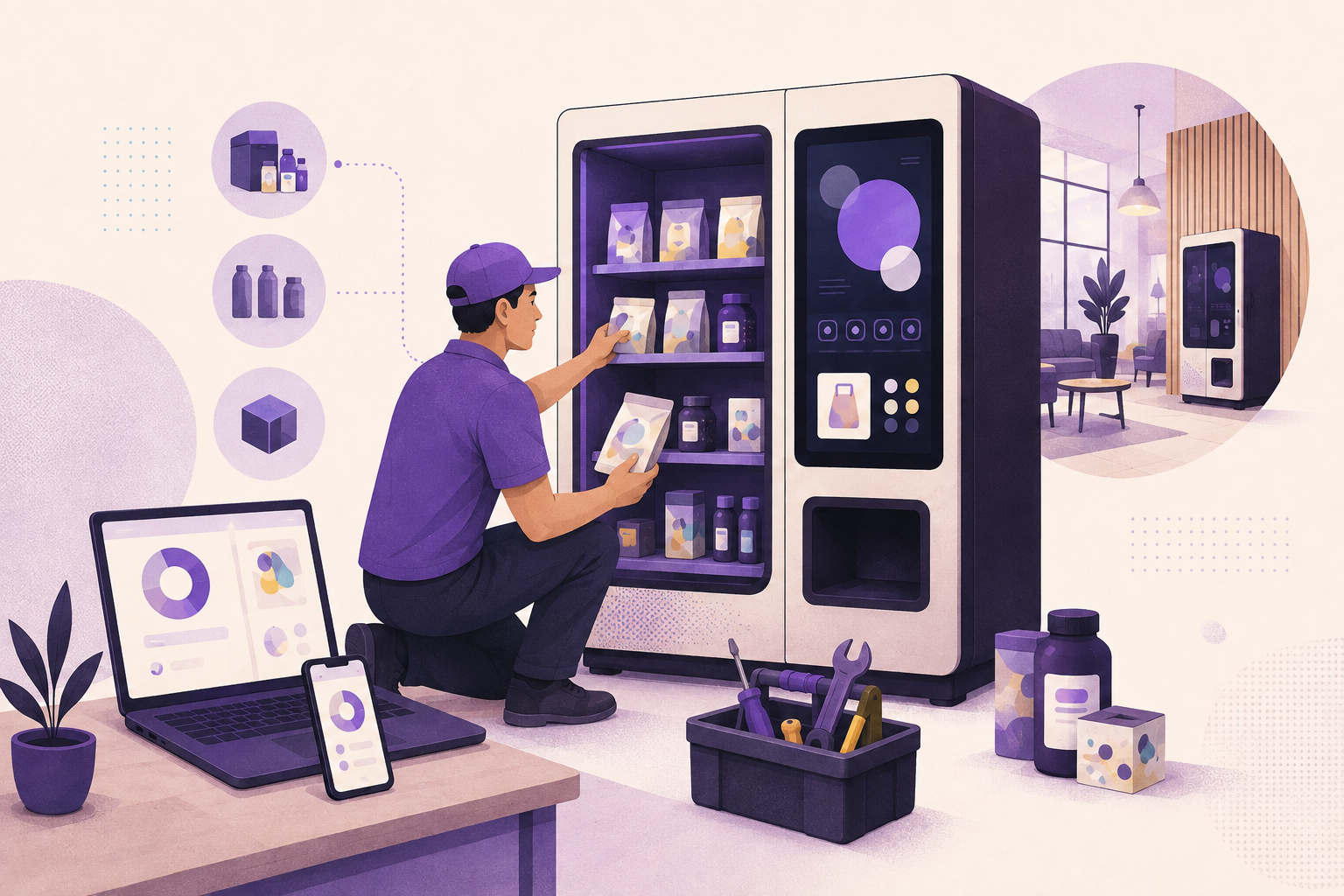
The long-term value of an interactive vending machine depends not only on whether the experience attracts attention, but also on whether restocking, consumable replacement, maintenance, and issue handling fit the operator’s actual resources.
Evaluate:
- Expected transactions or interactions per day
- Estimated hourly demand during peak periods
- Required product or consumable capacity
- Preferred restocking frequency
- Who will restock and inspect the machine
- Whether trained staff will be available on site
- Time required for one dispensing or production cycle
- Ease of replacing merchandise and consumables
- Whether inventory and transaction records are needed
- Whether remote equipment-status monitoring is required
- Whether low-stock or fault alerts are required
- Whether several machines or locations need to be managed together
- Training requirements for operators
- Availability of local basic maintenance
- Spare parts that should be prepared in advance
A larger machine may reduce the frequency of restocking, but it also requires more floor space and can increase transportation and installation requirements. A compact machine may be easier to deploy but may need more frequent replenishment.
The right choice is not automatically the machine with the greatest capacity. It is the configuration that balances sales volume, venue limitations, and the cost of daily servicing.
For multi-location projects, also consider whether equipment settings, content updates, and reporting need to be managed consistently. Do not assume that every machine includes the same remote-management functions. Confirm each required capability as part of the quotation.
5. Payment, Integration, Customization, and Delivery
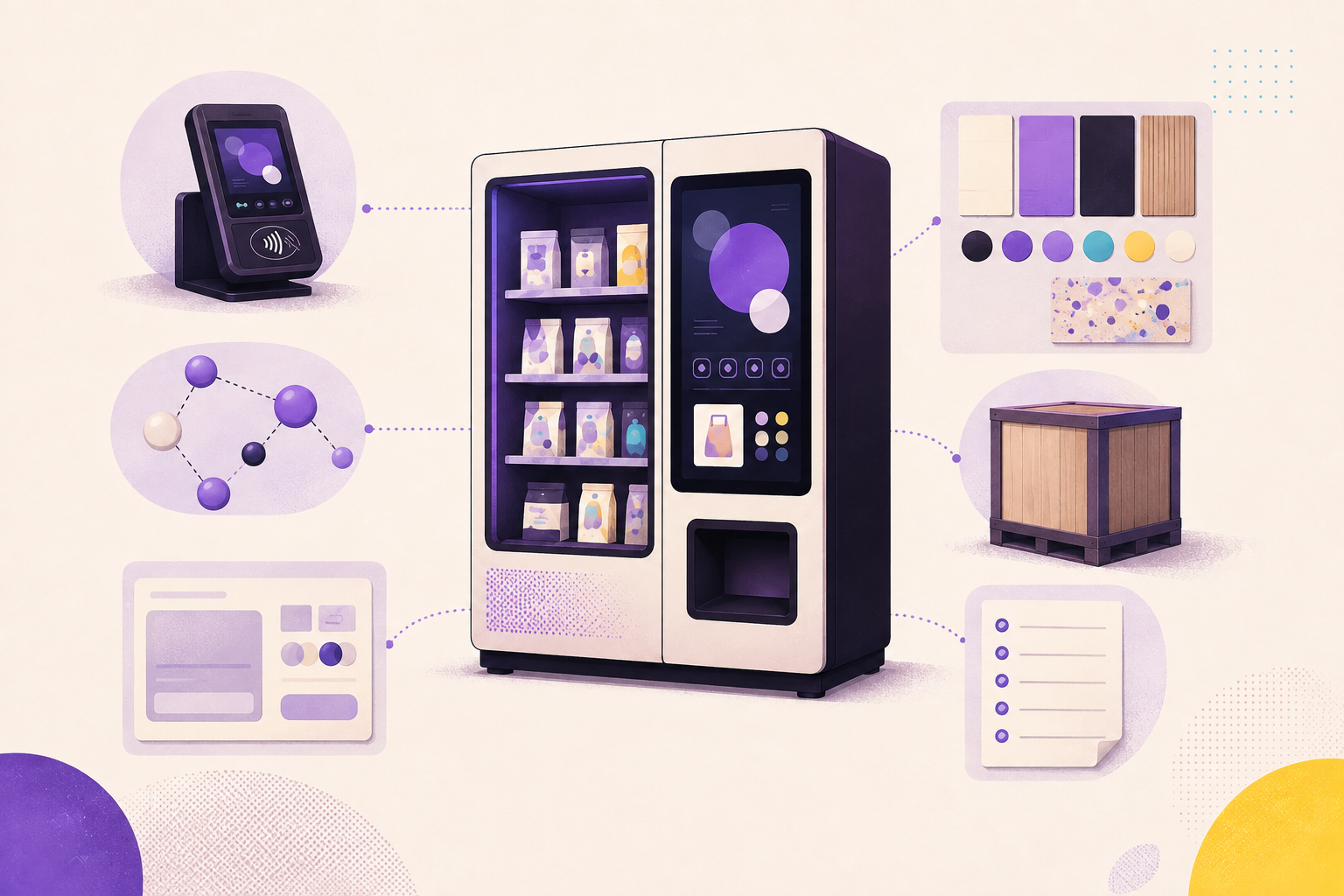
Finally, define the technical connections, customization scope, compliance requirements, and commercial conditions of the project.
Payment and System Requirements
Tell the supplier:
- Whether the machine needs cash, bank card, QR-code, or mobile payment
- The country in which transactions will be processed
- Whether a local payment service provider has already been selected
- Whether customers will use redemption codes, coupons, or membership benefits
- Whether the machine needs to connect to a website, app, ticketing platform, or campaign system
- Whether order, inventory, or interaction data needs to be exported
- Whether an API or another system interface is required
- Whether the project has specific privacy or cybersecurity requirements
Payment conditions vary between markets. A payment method cannot be considered available simply because a machine image shows a particular terminal or payment symbol. Compatibility depends on the machine configuration, local provider, merchant account, and project location.
Appearance and Content Customization
Interactive vending projects may also require decisions about:
- Cabinet color and branded graphics
- Custom cabinet shape
- Screen interface and operating language
- Images, animation, and video content
- Personalized product templates
- Venue themes and local cultural elements
- Future replacement of campaign content
- Which materials are supplied by the buyer and which are created by the equipment supplier
For a tourism souvenir project, the product templates and local content can be as important as the machine itself. For a branded pop-up or promotional campaign, allow enough time for creative review and approval.
Compliance and Project Conditions
The inquiry should also include:
- Country of installation
- Applicable electrical and safety requirements
- Required technical documents or certifications
- Purchase quantity
- Budget range
- Destination port or delivery address
- Target launch or opening date
- Installation, training, or on-site support requirements
- Spare-parts requirements
- Special packaging or transportation requirements
Certification, payment, and technical requirements should always be confirmed for the specific machine and project. It is not enough to ask whether a supplier has “relevant experience.”
Interactive Vending Project Requirement Checklist
Use this checklist when preparing your inquiry:
| Information Area | What to Provide |
|---|---|
| Product and consumables | Product type, package dimensions, weight, material, SKU count, and samples |
| Customer journey | Selection, photography, upload, game, payment, production, and collection steps |
| Installation scenario | Country, venue, indoor or outdoor placement, audience, and expected traffic |
| Site conditions | Available space, power supply, network, access route, and environment |
| Operations | Capacity, restocking frequency, operating hours, maintenance resources, and data needs |
| System functions | Payment, redemption, membership, back-office, and integration requirements |
| Customization | Cabinet, interface, language, templates, and interactive content |
| Commercial conditions | Quantity, budget, delivery destination, target date, and service scope |
Example of a Useful Project Brief
Instead of writing:
We need a souvenir vending machine. Please send us a price.
Provide a brief such as:
We plan to install an interactive souvenir kiosk at a tourist attraction. Visitors should be able to select a design, take a photo, review the result, and collect a personalized souvenir produced by the machine.
The kiosk will be installed inside a visitor center and will mainly serve families and international tourists, so the interface needs English and the local language. Weekend traffic is expected to be higher, and we want to keep the customer journey short while avoiding overly frequent consumable replacement.
Power and network access are available on site. We would like to understand the equipment dimensions, production process, customization options, consumable capacity, payment configuration, routine maintenance, shipping, and installation requirements.
The second version allows a supplier to assess the project and recommend a suitable configuration much more efficiently.
What If Some Requirements Are Not Yet Confirmed?
It is normal for an early-stage project to have unanswered questions.
Separate the information into three groups:
- Fixed conditions, such as location, available space, and target launch date
- Current estimates, such as traffic, sales volume, and budget
- Flexible items, such as machine size, interaction steps, and appearance
If the equipment model is not yet known, describe the customer experience and commercial goal instead of selecting a machine too early.
If no formal floor plan is available, provide a hand-drawn layout and a site video. If the product packaging is still being developed, provide an expected size range. If the payment provider has not been selected, state the installation country and the payment methods you want to support.
The supplier can use this information to prepare an initial proposal. Final engineering and pricing should follow confirmation of the product, site, and functional requirements.
Frequently Asked Questions
What is the difference between an interactive vending machine and a conventional vending machine?
A conventional vending machine usually focuses on product selection, payment, and dispensing. An interactive vending machine may also include photography, content selection, personalization, games, redemption, or branded experiences. The exact functions depend on the project configuration.
Can a supplier provide an accurate quotation from product photos alone?
Usually not. Photos do not provide complete information about dimensions, weight, material, or dispensing behavior. Share dimensions, weight, packaging details, and physical samples whenever possible.
Should we choose the machine first or design the customer journey first?
Define the commercial objective, customer journey, and product format first. Otherwise, you may select a machine that cannot support the required interaction or production process.
Is a larger machine always better?
No. Capacity should match sales volume, available space, and restocking frequency. A larger machine may reduce replenishment visits but also increase space, transport, and installation requirements.
When should we choose a standard machine rather than a custom solution?
A standard machine may be suitable when the product, payment flow, and appearance requirements are relatively conventional. A custom solution may be more appropriate for personalized production, unusual products, branded campaigns, or a unique interaction journey.
Why does the supplier need to know the installation country?
The country affects power, plugs, payment integration, language, certification, shipping, and data requirements. Without this information, a supplier can usually provide only a preliminary reference proposal.
Conclusion
The right interactive vending machine should fit the product, customer experience, installation site, and operating model at the same time.
Confirming the product and consumables, interaction journey, venue and audience, capacity and operations, and payment, customization, and delivery requirements will reduce unnecessary revisions and help the supplier prepare a more accurate equipment configuration and project proposal.
If you are planning an interactive retail, personalized souvenir, candy and gift vending, or other self-service experience, share your product information, site conditions, intended customer journey, installation country, and target timeline with JOYDD. The JOYDD team can then discuss suitable equipment options and customization directions for your project. Visit https://joyddtech.com to learn more or start a project conversation.
CONTINUE EXPLORING